
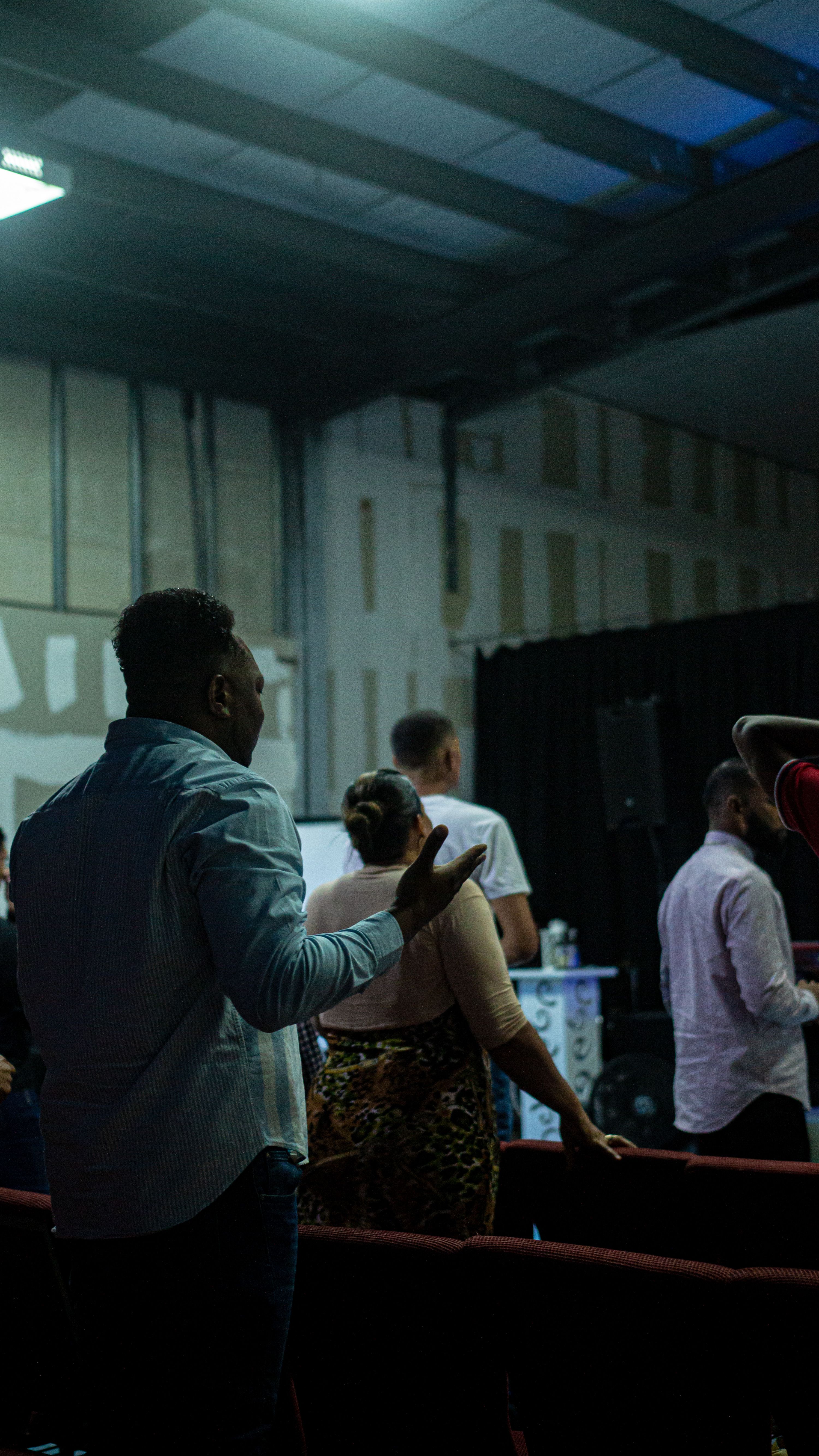
The marriage seminar ran the whole Saturday — thirty-one couples, a caterer who ran out of soda by 2pm, a guest speaker who overran his slot by forty minutes because nobody had the heart to cut him off mid-story about his own thirty-year marriage. It was, by every account, a good day. People cried a little. People laughed more.
And then, like most good church events, it ended, everyone went home, and nothing happened after.
Pastor Ruth had meant to follow up. She'd written herself a note — "call the seminar couples, check in, see who wants the follow-up small group" — and that note sat in a drawer under a stack of other notes for three weeks before she found it again, mildly ashamed, wondering how many of those thirty-one couples had needed a check-in in week one, not week three.
The gap this kind of event always has
This isn't a Pastor Ruth problem. It's a structural one. Events end, the energy of the room disperses the moment people walk out the door, and whatever momentum existed — the conversations started, the intentions formed, the "I should really talk to someone about this" moments — has a half-life measured in days, not weeks. Somebody has to remember to reach back out, and "somebody" is usually an already-overloaded volunteer whose to-do list was full before the event even started.
A generic bulk SMS portal was never going to solve this, because a bulk SMS portal has no concept of "event" or "attendee" in the first place. It knows a list of phone numbers you uploaded. It doesn't know that those particular numbers sat through a marriage seminar last Saturday and might need something three days later — that context lives in your head, or in a note in a drawer, not in the platform.
What changed the second time around
The next event — a youth leadership training, forty-two attendees — Pastor Ruth set up an attendee follow-up rule under Automation before the event even started. A message, timed to go out automatically a set number of days after the event ends, to everyone marked as having attended. She wrote it once: "Hi {{name}}, thanks for joining us at the leadership training — we'd love to hear how it's sitting with you. Reply or stop by the office anytime." Merge fields filled in each person's name. She set the delay, toggled the rule on, and went back to the eleven other things demanding her attention that week.
Four days later, without her touching a phone, forty-two messages went out. She found out only because two attendees replied the same afternoon, one asking about joining the youth leadership team properly, one just saying thank you for the training. She hadn't remembered to do anything. The system had remembered for her.
The relief in that, specifically
It wasn't dramatic — no fireworks, no big reveal. It was a Tuesday morning notification that a rule had run, quietly, exactly as configured, while she was in a completely unrelated meeting about the church roof. That's the actual payoff of automation done right: not that it's flashy, but that it's invisible until you go looking for it, and it happened anyway.
Compare that to what "follow-up" usually means without it — a note in a drawer, a WhatsApp reminder to self that gets buried under forty other messages, a volunteer who means well but is also managing three other ministries. The event attendee follow-up rule doesn't replace the pastoral phone call that should still happen for the couples who need real conversation. It just guarantees that nobody falls through a crack made of nothing but everyone being busy at the same time.
What this actually costs and how it works
Attendee follow-ups are configured once, under Automation, tied to a specific event — you set how many days after the event ends the message should go out, write the message with merge fields like {{name}}, {{church}}, {{event_name}}, {{event_date}}, and choose SMS, email, or both. The rule can be switched off just as easily if a particular event doesn't need one. Cost is the same UGX 35 per SMS part as any other message — automation doesn't change the per-part price, it just changes who remembers to hit send. For forty-two people on a short one-part message, that's a little over UGX 1,470 total, spent automatically on a Tuesday nobody had to think about.
Pastor Ruth still keeps a notebook of names she wants to personally follow up with — the automation isn't trying to replace her judgment about who needs a real conversation. It's just making sure the baseline "we haven't forgotten you" message goes out reliably, for every event, every time, whether or not the following week turns out to be as chaotic as the one before it usually is.