
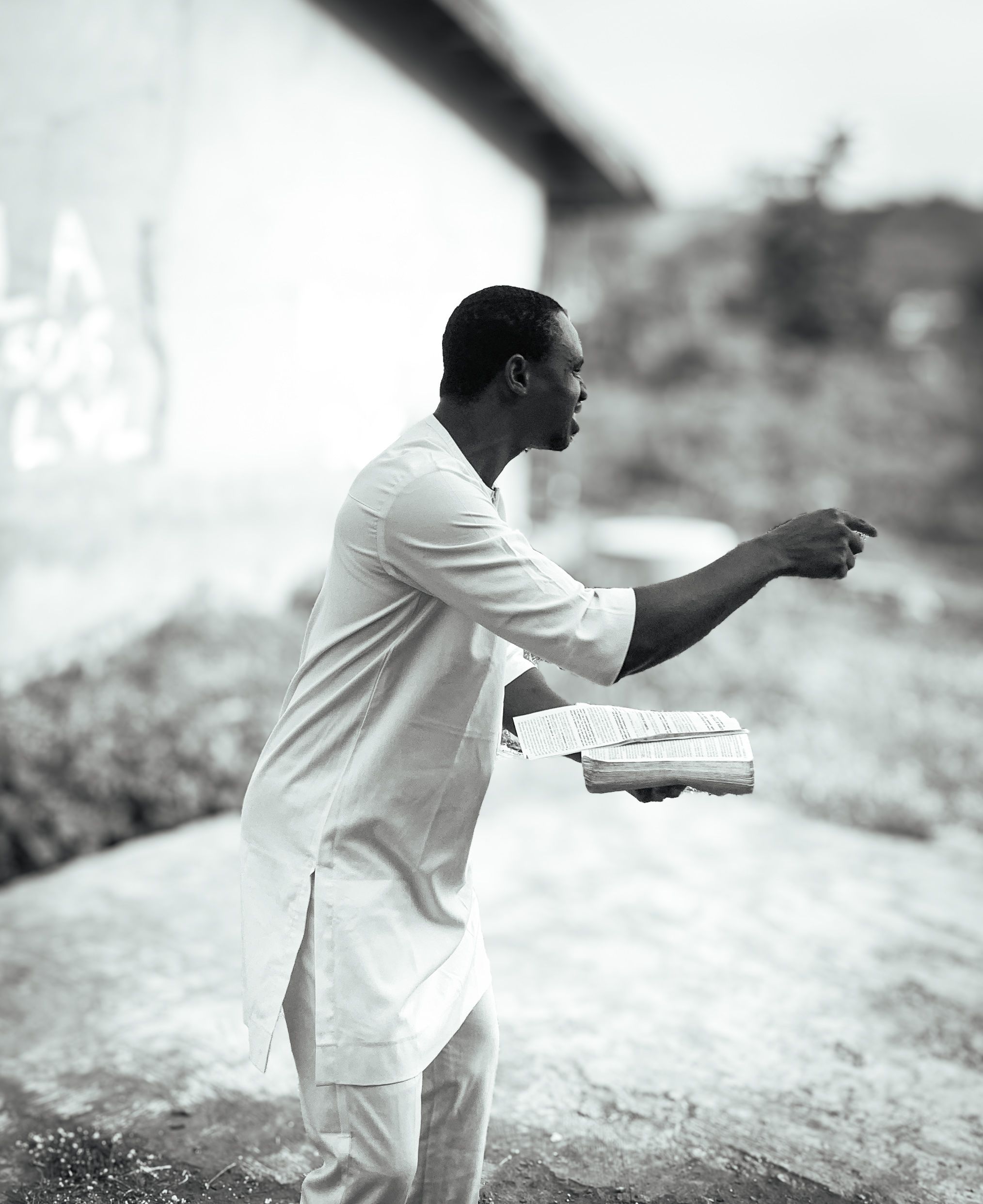
Nobody decided that Brother Okello had stopped coming to church. It just happened, the way these things do — a Sunday missed because of a work trip to Gulu, then two more because the trip turned into a temporary transfer, then a general drift once he was back in town but out of the habit. He wasn't avoiding anybody. He'd just fallen out of the rhythm, the way a lot of people quietly do, and nobody at the church had a system for noticing until months had gone by.
It was the youth choir coordinator who finally said something out loud, in a leaders' meeting in October: "Wasn't Okello in the men's fellowship? I haven't seen him since around March." A few people nodded vaguely. Nobody had his current number memorized. Someone thought he might have joined another church. Someone else thought he was just busy. The truth was simpler and less interesting than any of the guesses — he'd drifted, was a little embarrassed about how long it had been, and the longer it went on, the harder it felt to just show up again without an explanation ready.
The problem with relying on someone "noticing"
Most churches don't have a formal way of catching this. Attendance, when it's tracked at all, often lives in a paper register that nobody cross-references against the full member list until someone happens to ask a pointed question in a meeting. By the time a gap is noticed, it's usually already months old, and the person who's drifted has had that much longer to build a story in their own head about why going back would be awkward.
A generic bulk SMS portal can't help with this at all — not because of any flaw in the portal itself, but because it has no concept of attendance, let alone absence. It knows a list of numbers you upload. It has no way of knowing that a specific person hasn't been seen since March, because it doesn't know who anyone is beyond a phone number on a spreadsheet.
What the church actually did
Once the gap was noticed, the fix wasn't complicated. The admin pulled up Brother Okello's member record — attendance history was right there, showing the last recorded Sunday and the drop-off since — and sent him a short, plain, personal-sounding SMS. Not a mass blast, not an automated sequence; just one honest message, individually sent: that he'd been missed, that the men's fellowship still met Thursdays, that everyone would be glad to see him whenever he was ready.
He replied within the hour. Not with an excuse — with relief, more or less, the way people often respond when someone finally names the awkward thing instead of tiptoeing around it. He was back the following Thursday, sheepish about the months but clearly glad to have been asked rather than quietly written off.
What this is, and isn't
It's worth being precise here, because it would be easy to oversell this: FaithDash doesn't have a feature called "lapsed member detection" that automatically flags someone after a set number of missed Sundays and fires off a re-engagement sequence on its own. What it has is attendance records tied to real member profiles, visible in one place — which meant that once a human being had the instinct to check, the checking took two minutes instead of an afternoon of asking around leaders' WhatsApp groups for anyone's last sighting of Brother Okello.
The actual re-engagement — the noticing, the decision to reach out, the tone of the message — was entirely human, and it should be. A re-engagement text that reads like an automated nudge ("We noticed you haven't attended in 6 months") lands very differently from one that reads like a person who actually missed you wrote it. This is one place where the honest advice is: don't automate the outreach itself, just make it easy to see who needs it.
What this actually costs
A single personal SMS like this costs the same UGX 35 per part as any other message — effectively nothing, financially. The value was never in the price of the text. It was in having attendance and membership data sitting in the same place, so that "who have we lost track of" is a question you can actually answer by looking, rather than one that depends entirely on somebody happening to mention it in a meeting.
If your church has a Brother Okello — and most do, more than one, usually — the fix probably isn't a system that quietly re-engages people for you. It's a system that makes it easy enough to notice that someone finally does.